
Loss prevention
Entrances, tills, stock routes, loading points and higher-risk assets are covered with a defined operational purpose.
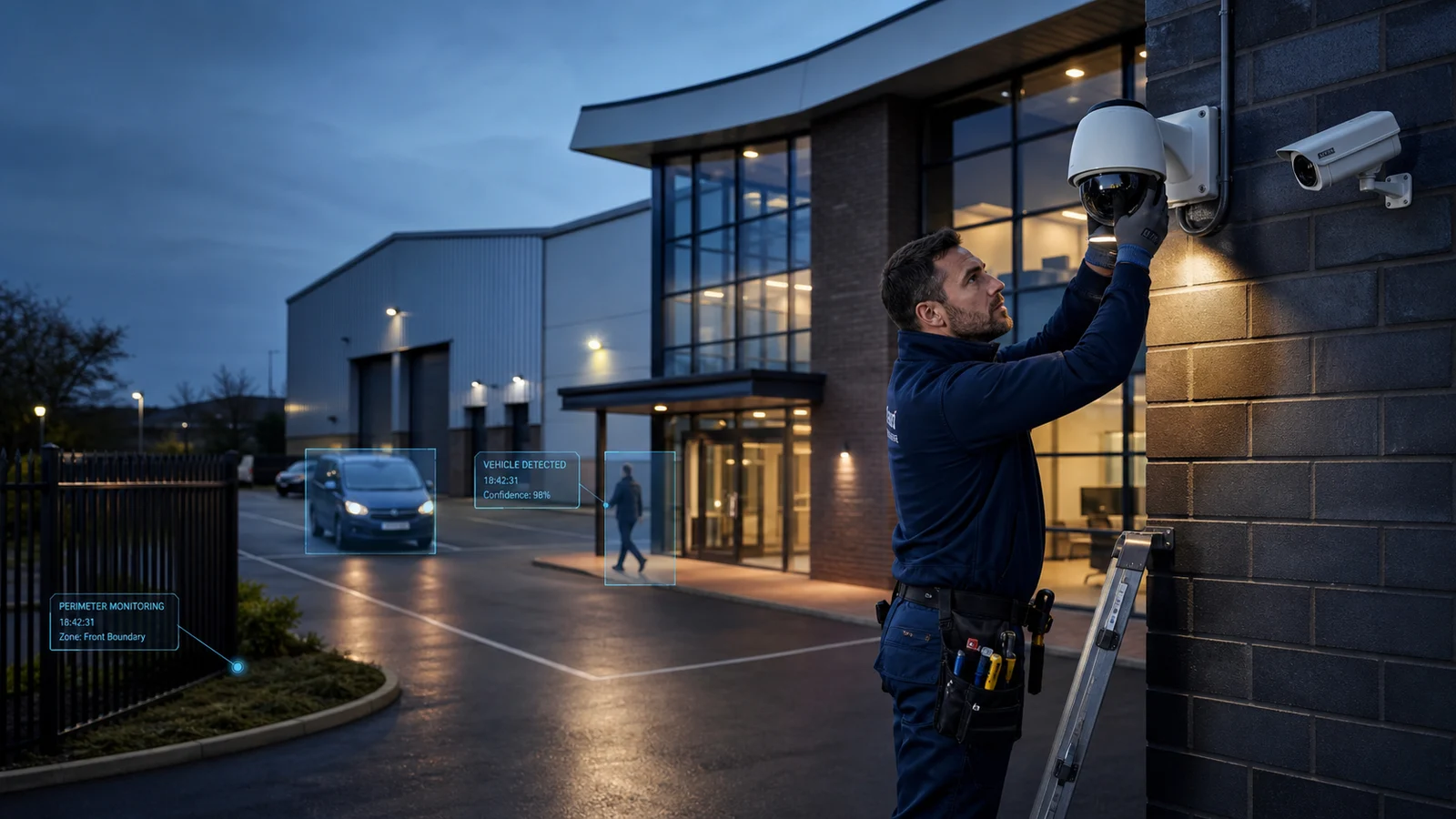
BlueMax designs, installs and supports professional business CCTV for retail, warehouses, offices, schools, hotels, restaurants, healthcare, factories and industrial sites—built around real risks, responsible operation and confident day-to-day use.
Security assessmentRisks, operations and evidence needs mapped
Professional installationPlanned coverage and documented handover
Scalable managementLocal, remote and multi-site viewing options
Reliable aftercareTraining, warranty and direct support
A well-designed commercial CCTV system supports loss prevention, employee and customer safety, incident investigation, insurance conversations and business continuity. BlueMax connects those objectives to clear camera purposes and practical operating procedures.
Entrances, tills, stock routes, loading points and higher-risk assets are covered with a defined operational purpose.
Image quality, timestamps, retention and smart search are configured so authorised staff can find relevant footage quickly.
Appropriate views can help organisations understand accidents, near misses and unauthorised access without replacing safe working controls.
Perimeter analytics, night imaging and alert workflows help teams focus on meaningful activity when premises are quiet.
A documented professional system may support risk discussions, although insurers decide their own requirements and any premium benefit.
Secure local recording, controlled remote access and clear handover help responsible teams respond confidently after an event.
Commercial CCTV installation begins with the operation: who uses the site, where loss or harm can occur, what evidence may be needed, and who is authorised to act on it. The following guidance explains how those decisions change across ten common sectors.
A useful business CCTV specification is a camera schedule with a reason behind every view. BlueMax maps public entrances, staff access, cash or stock movements, vehicle routes, restricted areas, lone-working locations and out-of-hours approaches. We then decide whether each scene needs identification, recognition, observation or general context. This prevents a common failure: installing a wide camera that records everything but shows too little detail when an incident occurs.
The assessment also considers lighting, mounting height, privacy, network capacity, recorder security, retention, export requirements and future growth. CCTV can deter theft, support investigations and provide valuable context for safety incidents, but it should never be presented as a replacement for supervision, access control, safe systems of work or a tested continuity plan. BlueMax explains those boundaries before the design is agreed.
Stakeholders should agree what a successful image looks like before cable routes are fixed. A facilities manager may need reliable perimeter alerts, an operations lead may need a clear loading-bay timeline, and a data protection lead may need masking around neighbouring property. BlueMax brings those requirements into one design, tests representative day and night conditions, and records assumptions such as working hours, expected vehicle speeds and available lighting. That evidence-led approach makes later decisions—lens choice, recording rate, storage period and user permissions—easier to explain and maintain.
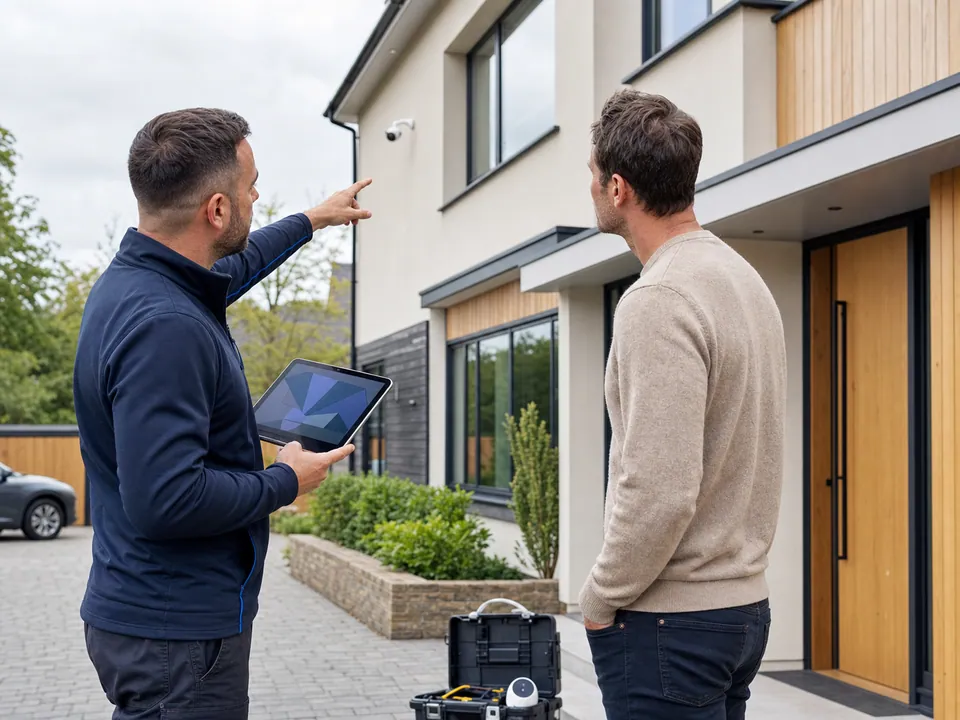
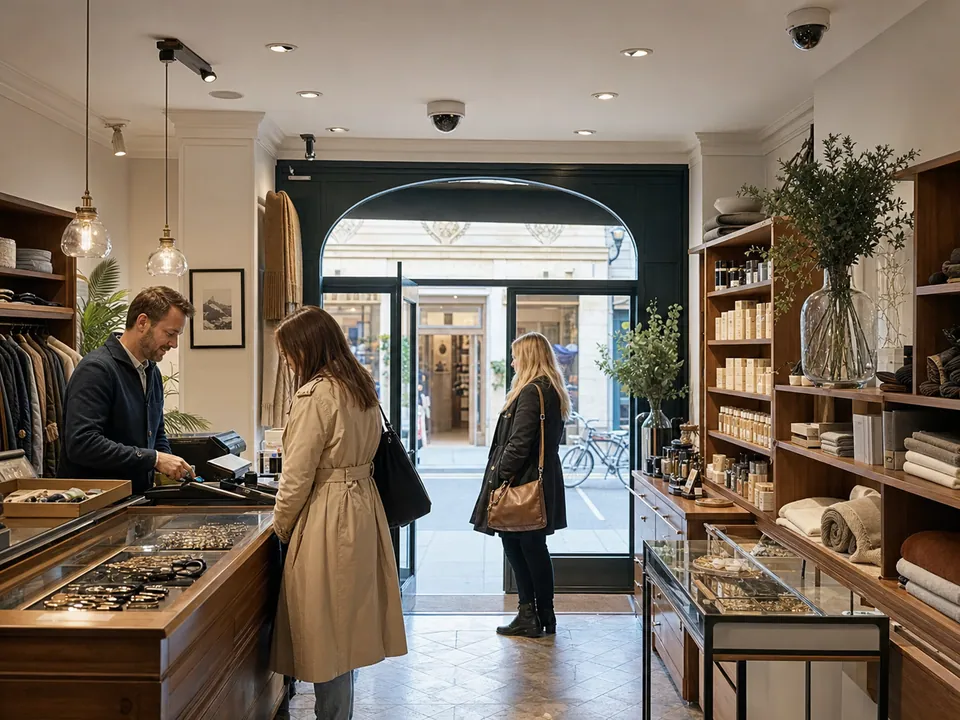
Retail risks include shop theft, till disputes, refund fraud, staff safety concerns and incidents at entrances. Useful locations normally include a clear identification view at the door, overview cameras across sales areas, carefully selected coverage around tills and higher-risk merchandise, and external views over service access. Cameras should not be hidden where customers or workers would reasonably expect privacy.
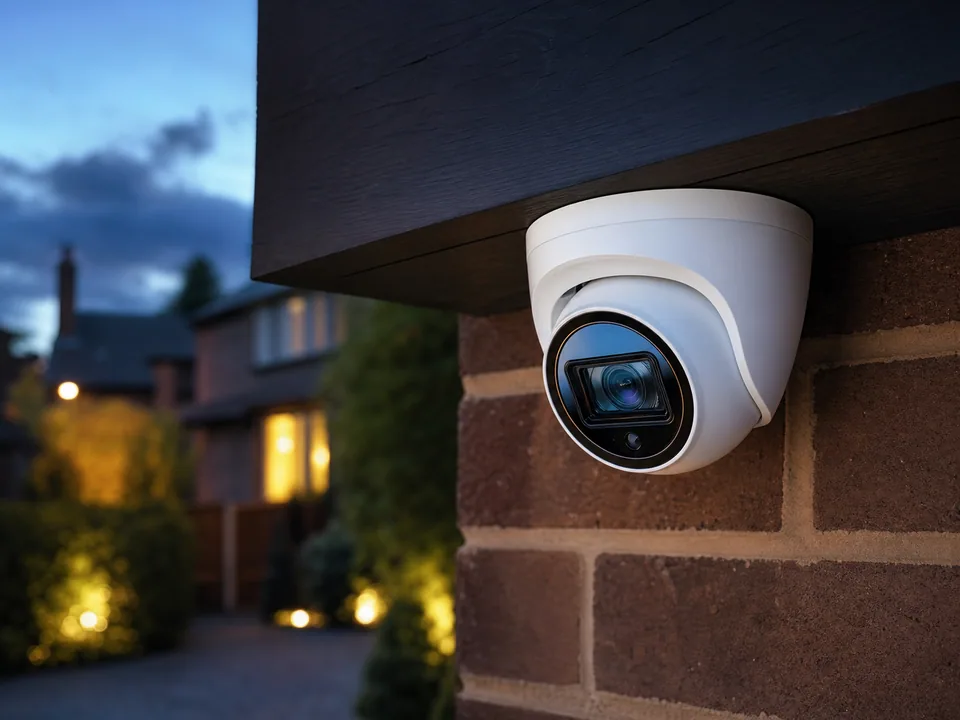
Varifocal domes can provide discreet indoor coverage, while turret or bullet cameras often suit external approaches. Person detection and smart search can narrow event review; line-crossing rules may support out-of-hours alerts. Analytics must be tested against shelving changes, displays and busy customer movement rather than treated as automatic proof of suspicious behaviour.
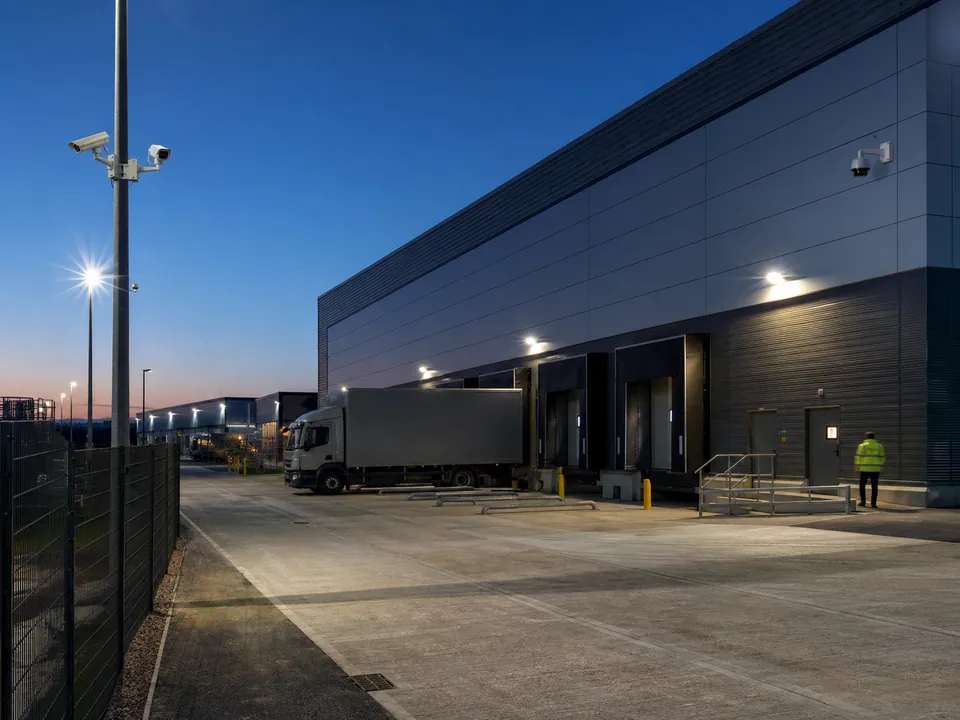
Warehouses combine large distances, tall racking, loading activity and rapid changes between indoor and outdoor light. Common risks include unauthorised access, stock loss, loading disputes, vehicle damage and blind areas behind fixed infrastructure. Coverage usually prioritises gates, pedestrian doors, loading bays, dispatch points, main aisles, cages and the secure route to the recorder.
High-resolution varifocal cameras provide context and tighter identification views; long-range lenses or ANPR may suit controlled vehicle entrances. Human and vehicle classification can filter perimeter events, while smart search reduces review time. Camera positions must avoid being blocked by pallets, raised doors or seasonal stock, and must not encourage staff to rely on CCTV instead of vehicle and pedestrian segregation.
Factories may need to protect raw materials, finished goods, machinery and controlled production zones while supporting incident review around shift changes. Typical risks include perimeter intrusion, unauthorised access, asset damage and disputes around deliveries or process areas. Cameras are commonly positioned at gates, doors, yards, dispatch points and selected production routes where there is a legitimate, documented need.
Robust fixed cameras, varifocal views and specialist low-light models suit demanding environments; housings and mounting must reflect dust, vibration, temperature and washdown conditions. Vehicle detection and perimeter rules can prioritise external events. Analytics should not be used as a substitute for machinery guarding, supervision or formal health-and-safety controls.
Schools must balance safeguarding, site security and privacy, with particular care because children are identifiable. Risks can include unauthorised entry, vandalism, vehicle movement and incidents in shared external areas. Suitable coverage may include gates, reception approaches, external doors, car parks, bicycle stores and building perimeters—not toilets, changing areas or spaces where privacy expectations are high.
Vandal-resistant domes and clearly positioned external cameras are often appropriate. Person detection can help authorised staff review perimeter events outside school hours, while controlled playback makes incident handling more efficient. The school should define necessity, retention and access, consider a data protection impact assessment and ensure signage and privacy information are clear before commissioning.
Hotels need to protect guests, employees, public areas, car parks and service access without creating intrusive surveillance. Risks include unauthorised entry, theft, disputes, vehicle incidents and out-of-hours access. Common camera positions include main entrances, reception approaches, corridors serving public routes, delivery doors, luggage stores and parking areas; bedrooms, treatment rooms and other private spaces must remain outside coverage.
Discreet vandal-resistant domes suit internal public areas, with low-light external cameras around approaches. Person or vehicle search can accelerate review after a reported event, and multi-site viewing may help an authorised security team. Role-based access and audit-friendly export procedures are especially important where guest footage may be sensitive.
Restaurants combine cash handling, customer safety, late opening, deliveries and busy staff movement. Typical concerns include entrance incidents, till disputes, stock access, aggressive behaviour and rear-alley security. Coverage may include entrances, public dining approaches, bar or till context, delivery points, external bins and staff access, while avoiding toilets, changing spaces and unnecessary close monitoring of workers.
Compact domes can provide balanced indoor views and ColorVu or hybrid-light cameras can preserve useful detail at darker external doors. Person detection can support out-of-hours alerts; smart search can help locate a time window quickly. CCTV should complement licensing, safeguarding, lone-working and conflict-management procedures rather than replace them.
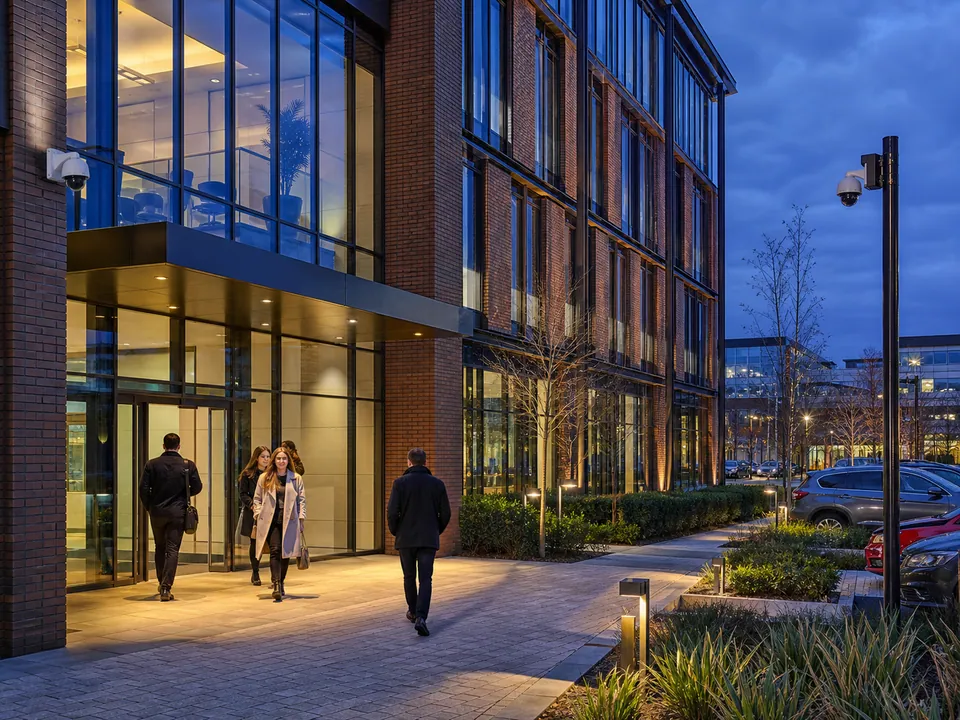
Office CCTV usually focuses on secure access, reception, deliveries, car parks and out-of-hours protection rather than continuous observation of desks. Risks include tailgating, equipment theft, aggressive visitors and incidents in communal areas. Identification views at principal doors should be supported by contextual coverage across reception approaches, external routes and selected shared areas.
Discreet domes, wide-dynamic-range entrance cameras and clear external cameras are common choices. Human detection can filter alerts when premises are closed, while mobile or desktop viewing helps authorised managers verify an event. Monitoring employees requires a clear, proportionate purpose, appropriate consultation and privacy information; covert monitoring is rarely justified.
Industrial estates can experience perimeter intrusion, metal or tool theft, vehicle damage and unauthorised movement between shared yards. Useful views include estate approaches, unit doors, fenced boundaries, storage compounds, loading areas and narrow vehicle choke points. Camera locations must account for articulated vehicles, changing stacks of materials and strong lighting contrast from open shutter doors.
Long-range varifocal cameras, ColorVu or infrared models and ANPR at controlled entrances may be appropriate. Vehicle classification, line crossing and intrusion zones can create focused out-of-hours events. A resilient design also considers cabinet security, surge protection, PoE capacity and network links between detached buildings.
Healthcare environments require an especially careful balance between staff safety, controlled access, public-area security and patient dignity. Appropriate coverage may include external approaches, reception entrances, car parks, medicine delivery routes and selected circulation points where there is a documented need. Consulting rooms, treatment areas and other spaces involving confidential care normally require strict exclusion or specialist governance.
Vandal-resistant domes, high-dynamic-range entrance cameras and controlled access to playback are typical priorities. Person search can help locate an incident time without extending retention unnecessarily. The organisation should involve its data protection and safeguarding leads, define access and disclosure procedures and complete a DPIA where the processing is likely to create higher risks.
Construction sites change continuously and face plant theft, trespass, vandalism and unauthorised vehicle access. Cameras may cover gates, hoardings, compounds, fuel stores, welfare-unit approaches and principal material routes. Positions must be reviewed as scaffolding, cranes, temporary lighting and site boundaries move; a view that works during groundworks may be blocked later.
Weather-resistant cameras, mobile towers where appropriate, long-range lenses and ANPR at managed gates can provide useful evidence. Human and vehicle alerts are most valuable when detection zones exclude public roads and routine works. Connectivity, local power, recorder security and relocation costs should be agreed in the design instead of being treated as afterthoughts.
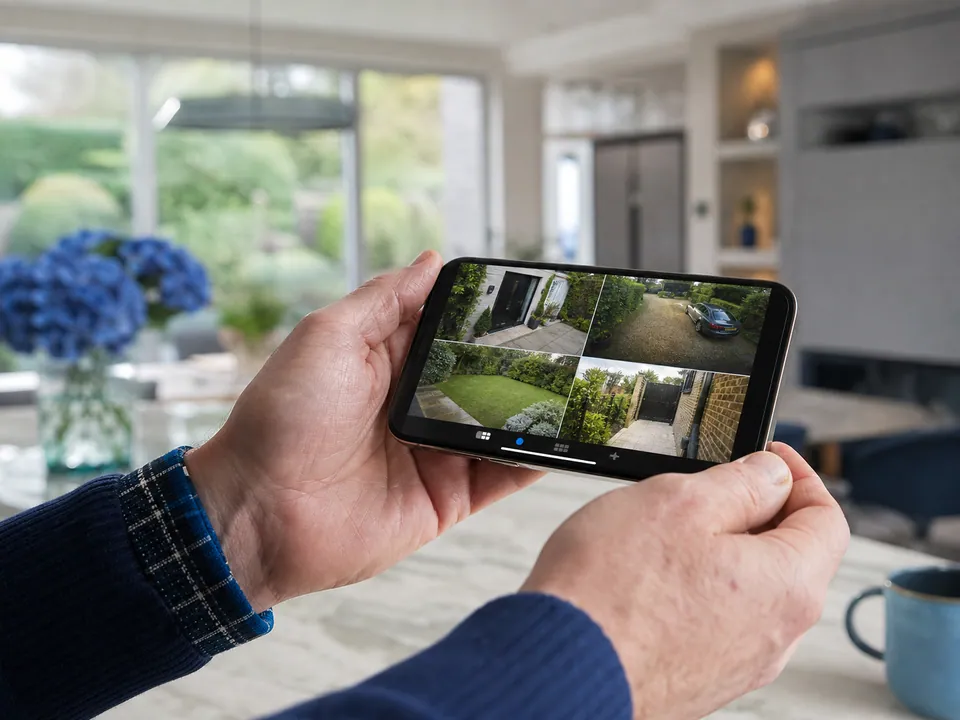
Resolution alone does not guarantee useful footage. Lens angle, subject distance, movement, compression, frame rate, light direction and recorder settings all affect what an authorised reviewer can actually see. A camera may look sharp on a daytime monitor yet lose faces under entrance backlight or blur a moving vehicle at night. BlueMax therefore evaluates the scene as a complete path from the subject to the exported file, with tighter views where identification or licence-plate detail is genuinely required.
The same principle applies to reliability. Camera uptime depends on appropriate power budgets, protected cable routes, network capacity, secure recorder placement, time synchronisation and storage health. Where remote access is required, account security and resilient connectivity matter as much as the mobile application. These dependencies are stated in the proposal so an IT team, landlord or third-party network provider can resolve them before commissioning rather than during an incident.
Keeping footage for the longest period a recorder can support is not a sound retention policy. The business should choose the shortest period that meets its documented operational and legal needs, taking account of how quickly incidents are normally reported and whether an insurer, regulator or contract creates a justified requirement. BlueMax sizes storage against the agreed camera count, recording mode, image quality and retention target, then demonstrates how authorised users can confirm that recording remains healthy.
When footage must be preserved, it should be exported promptly, stored securely and shared only through an approved process. An organisation also needs a route for subject access and disclosure requests, with redaction or specialist advice where other people appear. These responsibilities continue after installation, so training includes search, export and permission control rather than ending with a live-view demonstration.
CCTV can discourage opportunistic theft and provide an objective timeline after an incident. For loss-prevention teams, that may mean verifying stock routes or identifying the point at which a delivery discrepancy occurred. For customer and employee safety, footage can help establish who entered an area, what conditions were present and when support arrived. Clear evidence can also assist police, insurers or legal advisers where disclosure is lawful and necessary.
Insurance benefits are never automatic. Some insurers may value professional installation, secure recording or monitored perimeter protection, while others specify particular standards. BlueMax provides a clear system proposal and commissioning record, but the customer should confirm requirements directly with its insurer before relying on CCTV for a policy condition or premium reduction.
The organisation operating the system is normally the data controller and remains responsible for lawful use. It should document the purpose of each camera, choose proportionate retention, restrict authorised users, provide suitable signage and privacy information, and establish a process for footage requests. Staff should understand when live viewing is permitted, who can export video and how exported files are protected.
BlueMax configures credentials, permissions, privacy masking, recording schedules and export workflows around the agreed design. We provide practical user training, but legal decisions belong to the customer. Organisations should follow current ICO guidance and take independent advice for employee monitoring, audio recording, biometric analysis or other higher-risk processing.
Governance should also survive staff changes. Named owners, periodic user-access reviews, password and device procedures, routine image checks and an incident log help prevent a well-designed system becoming poorly controlled over time. Multi-site organisations may benefit from a common standard for camera naming, export records and escalation, while still documenting different purposes at each premises. BlueMax can make the technical configuration consistent; the customer remains responsible for keeping its policy, training and lawful basis current.
Before handover, BlueMax checks every agreed view, recording, time synchronisation, storage status, analytics, network connection and authorised device. We demonstrate live view, playback, smart search and export, then explain normal checks and escalation routes. Managers should understand what the system covers, which events generate alerts and what happens if power or connectivity fails.
A free commercial site survey turns general requirements into a camera schedule, system architecture and tailored quotation. It also identifies access equipment, containment, network dependencies, out-of-hours working and phasing before installation dates are agreed. That clarity is more valuable than an attractive camera count with important assumptions left unstated.
For phased or multi-site projects, the design can establish repeatable naming, recording and access standards while allowing each location to retain the views it genuinely needs. Capacity for extra cameras, switches or storage can be planned without buying unnecessary equipment on day one. The result is a maintainable security system with a clear operational owner, an understood evidence process and a practical route for future expansion.
Tell us about your premises, risks, users and future plans. BlueMax will turn them into a practical coverage proposal.
Final scope depends on required views, image detail, retention, access, network design, containment and installation conditions. BlueMax surveys the site and explains the complete system before booking.
Bespoke site quotation
A focused starting point for a small shop, office, clinic or unit with a limited number of priority views.
Bespoke site quotation
Broader coverage for retail, hospitality, larger offices or compact warehouses with several access points.
Bespoke site quotation
A scalable design for offices, schools, hotels, factories or warehouses needing coordinated zones and user roles.
Bespoke site quotation
Designed for extensive buildings, yards, logistics operations and sites requiring resilient network architecture.
Designed around your estate
Centralised viewing, consistent standards and controlled permissions across multiple buildings or operational locations.
Commercial quotations are prepared after a site survey. The proposal identifies equipment, recording, access, network assumptions, containment, working hours, access equipment and any optional monitoring or cloud services.
BlueMax combines professional cameras, secure recording and intelligent search with practical commissioning. Features are selected for the site and explained without unrealistic claims about automation.
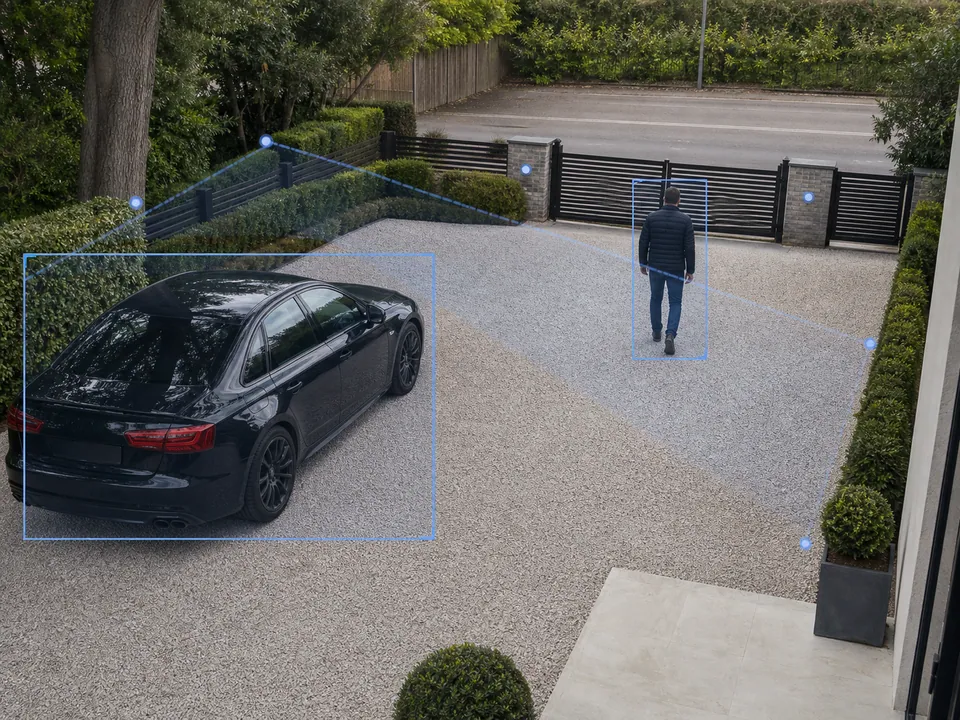
Capture number plates at controlled vehicle approaches using the right angle, speed, lens and illumination.
Classify selected movement as people to improve searches and reduce irrelevant out-of-hours alerts.
Identify relevant vehicle events across gates, yards, loading areas and car parks.
Use line-crossing and intrusion zones to focus attention on meaningful movement around boundaries.
Preserve useful colour detail in suitable low-light scenes, subject to available light and positioning.
Connect agreed alarms or events to an authorised response workflow where a monitoring service is specified.
Match infrared, white-light or hybrid illumination to the surfaces, distances and operating conditions.
Keep professional local recordings with capacity calculated around cameras, quality, schedule and retention.
Protect selected footage or events off site where connectivity, service terms and data governance allow.
Reduce review time by filtering recorded events around people, vehicles, time windows or defined areas.
Create a tighter identification view at an appropriate vehicle choke point instead of relying on a wide overview.
Give authorised users secure live view, playback and notifications across compatible phones and tablets.
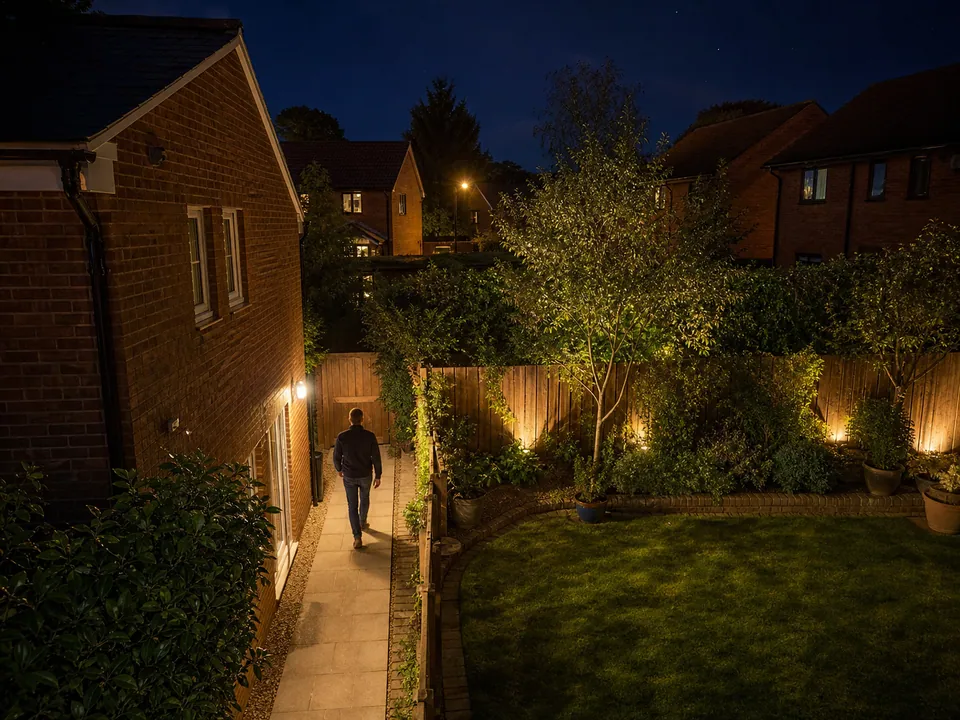
One BlueMax team stays accountable for understanding the requirement, designing the system, delivering the work and supporting the handover.
We discuss the organisation, sites, concerns, users, evidence needs and decision process.
BlueMax inspects entrances, routes, lighting, access, cabling, networks and recorder locations.
Risks are translated into defined camera purposes, priorities, retention and response requirements.
You receive an explained camera schedule, architecture, assumptions and tailored written quotation.
Cameras, containment, cabling, recording and network equipment are installed with care.
Views, recording, analytics, permissions, alerts and authorised devices are tested against the design.
Responsible staff learn live view, playback, smart search, export and normal system checks.
We explain the three-year warranty, aftercare route, maintenance needs and expansion options.
These realistic scenarios illustrate the BlueMax planning approach. They are examples, not claims about named customers; every live project is surveyed and specified individually.
Problem: Repeated stock discrepancies and disputes were difficult to investigate because existing views were too wide.
Solution: Add a clear entrance view, coordinated sales-floor coverage and contextual till cameras with secure local recording.
Outcome: Authorised managers can follow an event from entry to exit and find relevant footage without searching an entire day.
Problem: Delivery disputes and blind areas around shutters left the operation without a reliable event timeline.
Solution: Combine yard overviews, tighter loading views, a gate identification camera and vehicle-filtered search.
Outcome: Dispatch staff gain clearer evidence around arrivals, bay activity and departures while preserving safe traffic controls.
Problem: The organisation needed better verification of visitor and contractor access without monitoring desk-based work.
Solution: Cover main doors, reception approach, shared circulation and car-park access with role-based viewing.
Outcome: Security incidents can be reviewed proportionately while ordinary work areas remain outside unnecessary coverage.
Problem: The team faced entrance incidents and poor visibility around the rear delivery door after closing.
Solution: Use a clear entrance camera, public-area context and full-colour low-light coverage at the rear access point.
Outcome: Managers have more useful evidence and focused out-of-hours alerts without extending cameras into private staff areas.
Problem: Vandalism near an external gate required investigation, but the school needed strict limits around children’s privacy.
Solution: Position vandal-resistant cameras at gates, reception approach and building perimeter with controlled retention and access.
Outcome: Responsible staff can review perimeter incidents while sensitive internal and changing areas remain excluded.
Problem: A shared estate yard generated frequent motion alerts, masking relevant activity near a secure compound.
Solution: Reposition long-range views, define intrusion zones and classify people and vehicles at agreed approaches.
Outcome: The response team receives fewer irrelevant events and can verify activity using recorded context before escalation.
These answers cover design, operation, privacy and support. Your free site survey confirms what is technically appropriate for the premises.
Request a free commercial surveyCommercial CCTV is quoted after a survey because price depends on camera purposes, quantity, image detail, storage, cabling, network design, access equipment and working conditions. BlueMax provides a written scope identifying assumptions and optional services before booking.
Yes. The survey allows BlueMax to understand risks, user requirements, entrances, lighting, cable routes, recorder security and future expansion. It produces a more reliable design than pricing from a camera count alone.
Workplace monitoring must be necessary, fair, proportionate and transparent. Employers should define the purpose, consult where appropriate, provide privacy information and assess risk before installation. Continuous monitoring of individuals is rarely justified. Review the ICO’s monitoring workers guidance.
Some insurers consider professionally installed security or specify CCTV as part of risk controls, but a premium reduction is not guaranteed. Confirm required standards, recording periods and monitoring arrangements with your insurer before finalising the system.
UK data protection law does not prescribe one universal CCTV retention period. The organisation should keep footage for the shortest period necessary for its documented purpose, then delete it securely. Storage capacity alone is not a valid reason to keep footage longer.
People should be informed before entering a monitored area. Signs should be prominent and explain that CCTV operates, its purpose and who to contact where responsibility is not obvious. Staff should know how to respond to privacy enquiries.
Yes. Compatible systems can provide authorised central or mobile viewing across several sites. A good design standardises site names, camera labels, permissions, time settings and incident export while preserving appropriate local resilience.
The number follows from the views required, not floor area alone. A small office may need four focused views, while a warehouse may need separate overview, identification, loading, perimeter and vehicle cameras. The survey creates the camera schedule.
Integration may be possible depending on the selected products, interfaces and desired response. BlueMax confirms whether the requirement is simple event verification, linked access records, remote monitoring or a more specialised integration before specifying equipment.
AI-enabled CCTV can classify people or vehicles, apply line-crossing rules and accelerate smart search. It is a filtering tool rather than a guarantee: performance depends on camera angle, target size, lighting, weather and careful commissioning.
Businesses should check camera cleanliness and alignment, recording, storage health, time synchronisation, remote access, user permissions and signage. Reviews should also confirm the system remains necessary and that building or operational changes have not blocked important views.
Local NVR storage provides continuous on-site recording without depending on internet bandwidth. Cloud services can protect selected footage or events off site, but introduce connectivity, subscription and data-governance considerations. Many businesses use local recording with targeted off-site resilience.
Yes. Compatible systems can provide secure live view, playback and notifications on authorised mobile devices. Access should be role-based, protected with strong credentials and removed promptly when a person no longer requires it.
A local NVR can continue recording while external internet service is unavailable if cameras, switches, recorder and local network remain powered. Remote viewing, cloud backup and notifications may stop until connectivity returns.
Standard equipment stops when its power source fails. A correctly sized uninterruptible power supply can provide temporary backup for selected cameras, network switches and recording, but duration depends on equipment load and battery capacity.
Yes, where the site provides a suitable controlled approach. Reliable capture depends on vehicle speed, lane position, angle, distance, lens and illumination. The operator must also document the purpose, signage, access and retention for number-plate data.
Audio is more intrusive than video and is difficult to justify as continuous workplace surveillance. The organisation must decide whether it is necessary and lawful, assess the risks and give clear information. BlueMax does not enable audio merely because equipment supports it.
People may have data-protection rights concerning images of themselves, subject to applicable exemptions and the rights of others. The organisation should maintain a process for locating, reviewing, redacting and securely disclosing footage within relevant timescales.
Timing depends on camera count, access, containment, cable routes, network work, operational hours and testing. Small systems may take one or two days; large or occupied sites may require phased work. The quotation sets the expected programme.
Yes, if spare recorder channels, PoE capacity, network bandwidth, storage and containment are planned early. BlueMax asks about likely new units, yards or sites so today’s design does not unnecessarily restrict future growth.
The three-year on-site replacement warranty covers qualifying faults in equipment supplied by BlueMax and BlueMax installation workmanship, subject to the published terms and exclusions. Review the full BlueMax warranty before booking.
BlueMax Technology Support Ltd designs business CCTV around operational risks, responsible access and future expansion. Customers receive an explained quotation, professional installation, configured equipment, user training, reliable aftercare and direct support from a Cambridgeshire-headquartered UK company.
Speak to BlueMax for a site assessment, camera schedule, tailored quotation and professional installation plan.
 WhatsApp
 View Google Business