
Crime deterrence
Visible, professionally positioned cameras can discourage opportunistic trespass, theft and vandalism while preserving useful evidence.
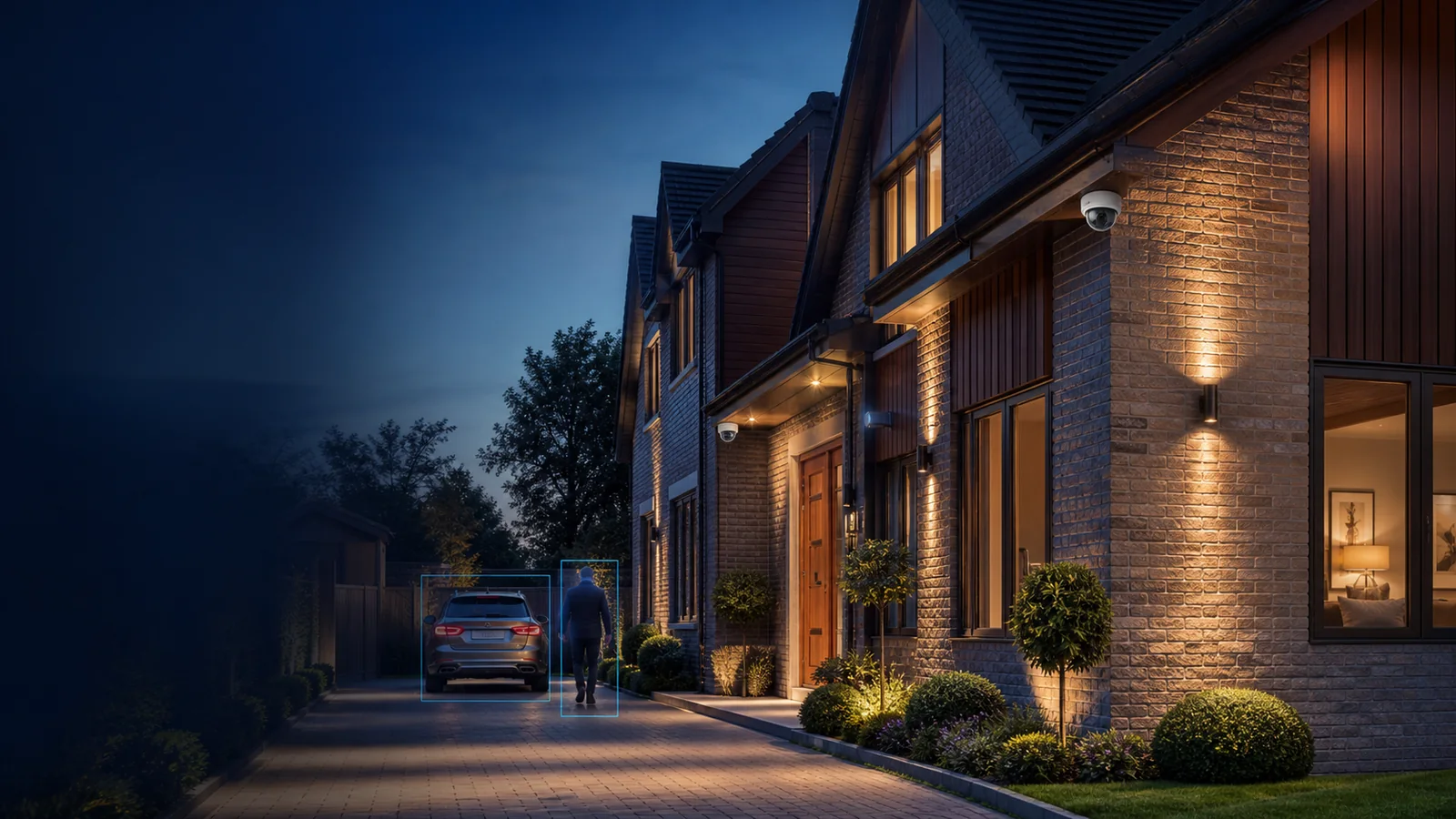
BlueMax designs, installs and supports residential CCTV around your family, property and daily routine—with intelligent person and vehicle alerts, dependable recording, colour night imaging and secure mobile viewing.
Family-focused designCoverage planned around real household risks
Professional installationNeat cabling, tested views and secure recording
Mobile confidenceLive view, playback and useful smart alerts
Long-term supportFriendly training, warranty and direct aftercare
Good residential CCTV helps deter opportunistic crime, document incidents and let you check what matters without turning your home into a surveillance project. The right views can cover people, vehicles and access points while respecting neighbouring privacy.
Visible, professionally positioned cameras can discourage opportunistic trespass, theft and vandalism while preserving useful evidence.
Clear entrance coverage provides context around callers, deliveries and parcels without relying on a single wide doorbell view.
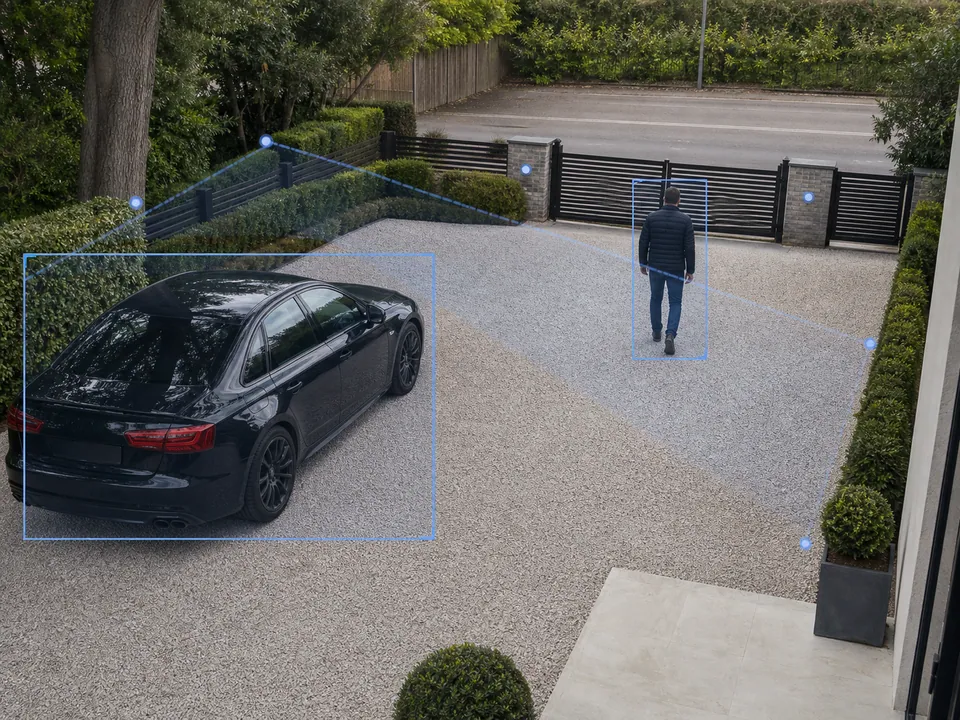
Driveway views can record approaches, parking areas and vehicle activity with detail selected for the distance and lighting.
Secure remote access lets authorised household members check live view, playback and meaningful alerts while away.
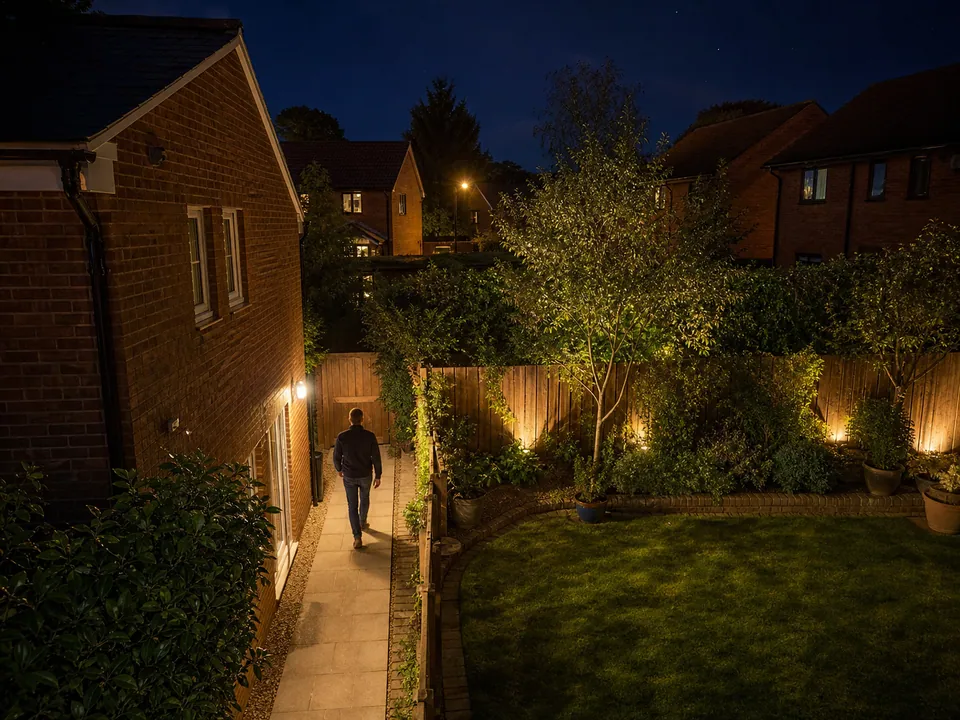
Side access, rear routes, garages and sheds can be included without creating unnecessary views into neighbouring property.
Appropriate cameras can help verify arrivals, external play areas or pet movement while keeping private indoor spaces private.
A detached house, terrace, apartment and rural home create different boundaries, access routes, mounting options and privacy responsibilities. This guide explains how a residential security consultant turns those differences into useful camera views.
A home CCTV survey begins with the events you want to understand. That may be identifying a caller, seeing whether a parcel was left, confirming which vehicle entered the drive, monitoring a vulnerable side passage or checking an outbuilding while away. Each purpose needs a suitable view. An overview camera can show what happened across a garden, while a tighter entrance view is more likely to identify a person. One camera rarely performs both jobs equally well.
BlueMax also assesses daylight and night lighting, subject distance, mounting height, cable routes, Wi-Fi and network availability, recorder security, mobile access and future plans. Cameras are then positioned to cover your land as far as practical, with privacy zones where a neighbouring window, garden or public area would otherwise be captured unnecessarily. The result should feel proportionate, simple to operate and capable of producing useful footage when something genuinely matters.
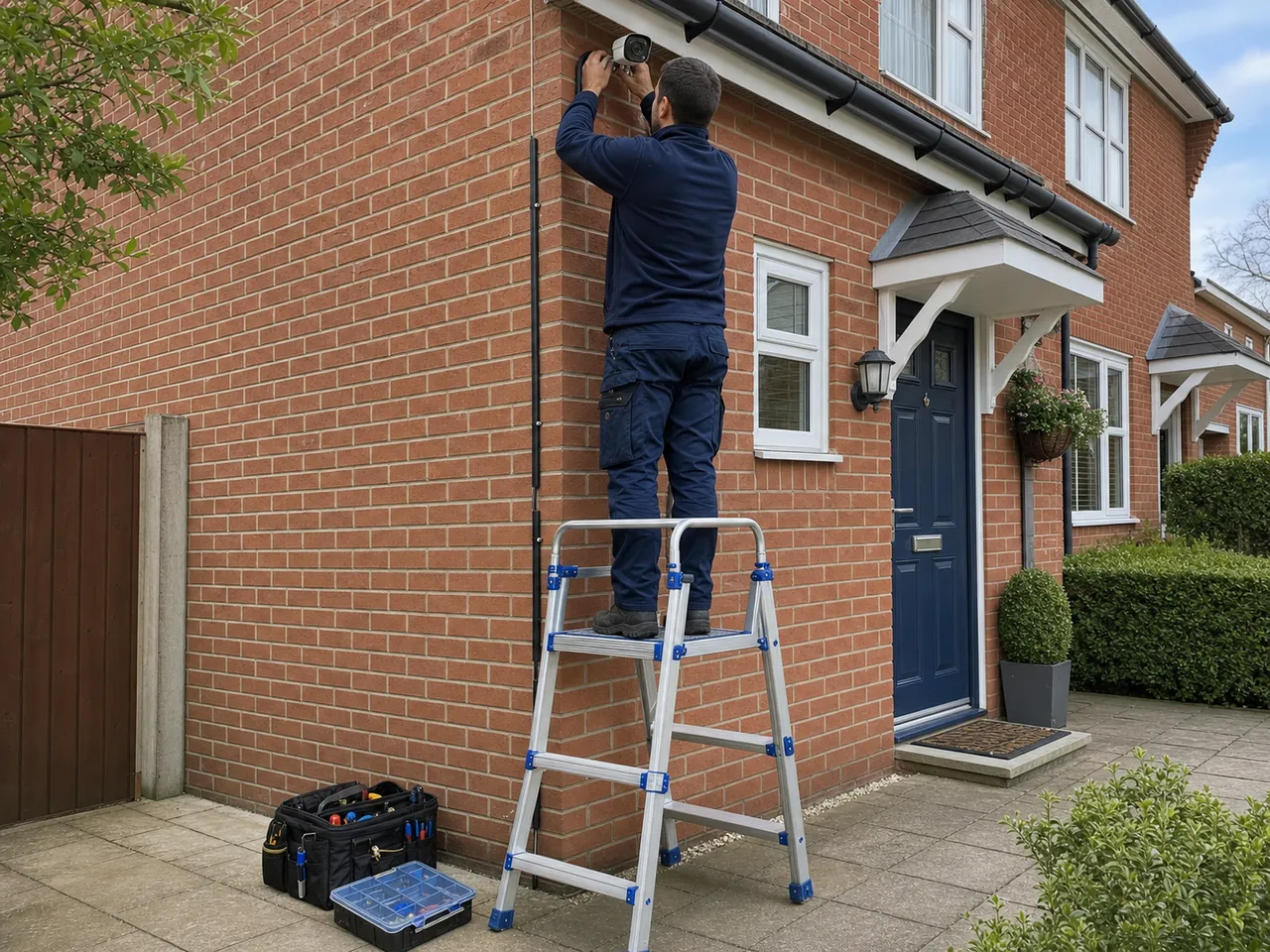
Detached homes often have several independent approaches: a front path, driveway, side gates, rear garden and sometimes a garage or outbuilding. Typical concerns include vehicle interference, parcel theft, side-access intrusion and movement between the front and rear. A balanced design commonly uses a clear front-door or approach camera, driveway coverage, one or two side/rear views and a focused camera for a detached garage where risk justifies it.
Longer walls provide flexible mounting positions, but trees, drainpipes, open windows and bright security lights can obstruct or wash out images. Cabling can often follow loft, soffit or service routes with the recorder secured inside. BlueMax checks whether each camera gives an overview or identification view and avoids simply mounting every camera high at the corners.
Semi-detached properties usually combine a shared boundary with private front, side and rear routes. Risks often concentrate around the driveway, a narrow passage beside the house, bins or gates and a rear patio. Three or four cameras may be enough when views are coordinated: entrance identification, driveway context, side access and rear garden coverage.
The shared wall and neighbouring driveway need particular care. A fixed lens or privacy mask may restrict coverage to the homeowner’s approach, while a lower, deliberate angle can be more useful than a wide view from the roofline. Cable routes should remain on the customer’s property and avoid crossing party-wall or neighbour-controlled surfaces without permission.
Terraces have compact frontages, public pavements close to the door and rear access that may run through alleys or shared passages. A front camera must be narrow enough to focus on the entrance and immediate approach rather than continuously recording an excessive stretch of street. At the rear, a camera can cover the garden gate, patio doors or shed while excluding adjoining gardens.
Internal cable routes may be less accessible because there is no external side wall. BlueMax plans through lofts, service cupboards or discreet exterior containment and explains any visible route before installation. A two- or three-camera design can outperform a larger system when each view has a clear purpose and appropriate night lighting.
A flat owner may want to verify callers, protect a private balcony or monitor an allocated entrance, but communal hallways, shared doors and building exteriors are normally controlled by a freeholder, landlord or management company. Installing a camera without the necessary consent can create lease, planning and privacy problems even when the security concern is reasonable.
BlueMax first establishes what the resident owns or is permitted to alter. An internal entrance-hall view, a carefully configured video doorbell or a camera covering a private terrace may be possible, but audio and communal coverage require extra caution. Written permission should be obtained before drilling shared fabric or viewing common areas.
Purpose-built apartments may already have building-wide access control or CCTV, yet residents can still have concerns about their own front door, parking bay or storage area. The first step is to understand what the managing agent’s system covers and whether residents can request footage after an incident. A private camera should fill a legitimate gap rather than duplicate or conflict with communal surveillance.
Wireless products may appear convenient, but dense buildings can have congested radio networks and strict fire-stopping rules around cable penetrations. Any installation must respect lease terms, communal electricity, fire doors and escape routes. BlueMax will recommend proceeding only where permissions, mounting and field of view can be handled responsibly.
Large homes can include multiple entrances, long drives, detached garages, leisure buildings and extensive gardens. The design should divide the property into layers: boundary or driveway awareness, identification at chosen choke points and closer coverage around doors and valuable outbuildings. This prevents reliance on distant wide-angle views that show movement but not useful detail.
Network switches, fibre links or point-to-point connections may be needed between buildings, with storage sized for camera quantity and the requested recording period. Spare NVR channels and PoE capacity can make later expansion economical. User permissions should remain simple so household members can find the right camera without navigating an unstructured list.
Rural properties may face long approaches, limited street lighting, isolated buildings, wildlife movement and unreliable broadband. Useful views commonly include the main vehicle entrance, yard, fuel or tool storage, stable or barn approaches and the route between the house and outbuildings. Cameras must be selected for the actual distance rather than advertised solely by megapixel count.
AI person and vehicle classification can reduce alerts caused by branches or small animals, although no detection is perfect. Local NVR recording continues without internet when the cameras, recorder and network remain powered. Remote viewing and notifications depend on available connectivity, so BlueMax tests bandwidth and explains realistic limits before promising off-site access.
Country houses can combine architectural sensitivity with extensive grounds, listed features or conservation-area restrictions. A discreet design may use carefully coloured containment, existing service routes and camera positions that protect main approaches without dominating the façade. Gates and long drives can benefit from dedicated vehicle views, while entrance cameras provide closer identification.
Outbuildings may need separate network and power planning, lightning and surge considerations and secure local switching. Where the building is listed or local restrictions may apply, the homeowner should confirm permission before work. A phased plan can protect priority areas first while preserving a documented route for later estate-wide coverage.
New-build homes often have good loft access and modern networks, but warranty conditions, insulated façades, fire barriers and developer restrictions can affect drilling and cable routes. Early planning creates the cleanest result: NVR location, router access, PoE cabling and camera positions can be agreed before landscaping, fitted storage or loft boarding makes routes harder to reach.
A typical design covers the front entrance, drive or parking space, vulnerable side route and rear doors. Smart-home integration should be treated carefully; a CCTV app can coexist with alarms and lighting without forcing every product into one unreliable interface. BlueMax documents what is connected, who owns each account and which elements can expand later.
The best position is determined by the evidence needed, not simply the highest available mounting point. Cameras should be hard to tamper with but low and close enough to produce useful facial, clothing or vehicle detail. BlueMax checks representative views on the installer’s monitor and in the homeowner app before final sign-off.
Use a clear approach or identification view for callers and parcels. Avoid pointing directly into a neighbour’s doorway or capturing more pavement than necessary.
Cover vehicle approaches and parking positions with lighting and distance in mind. A wide overview may need a second tighter view when number-plate detail matters.
Position the camera toward gates, paths and vulnerable doors rather than every part of family life. Plant growth and seasonal furniture should not block the view.
Cover the main door, side entrance or vehicle area. Detached garages may require separate power, network and surge planning rather than an improvised wireless connection.
A narrow passage is often an effective detection zone. The camera should see a person before they reach rear doors while masking neighbouring windows and gardens.
Prioritise rear gates, patio doors and routes from outbuildings. Night lighting should reveal people without reflecting from walls, guttering or nearby foliage.
A contextual view can protect glazed doors and record an approach. Keep the angle proportionate so ordinary family activity is not monitored more closely than needed.
An indoor camera may confirm entry during an alarm or absence, but it should avoid private living areas and be discussed with everyone who regularly occupies the home.
Sheds, workshops and garden rooms may need a close door view plus secure network connectivity. Recording should normally return to a protected recorder in the main home.
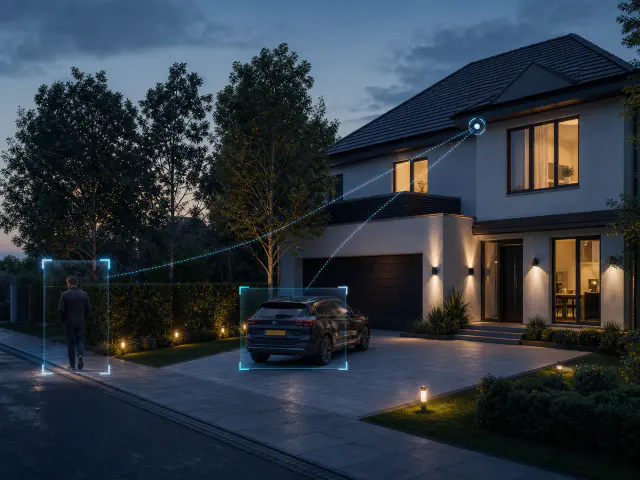
CCTV is most useful as one layer of home security alongside suitable locks, lighting, alarms and sensible routines. Visible cameras may deter an opportunistic visitor, while recorded footage can establish a timeline after a vehicle incident, damaged gate, parcel dispute or attempted break-in. Image quality should be tested for the conditions in which evidence is most likely to be needed, particularly at night.
For family safety, the aim is reassurance rather than constant checking. Alerts can confirm that an older child arrived home, show who is at the door or help a household member verify an unusual noise before opening it. Pet monitoring can be appropriate in a garden or selected indoor area, but private rooms and audio recording deserve a much higher threshold.
Compatible systems can provide live view, playback and notifications on authorised phones and tablets. BlueMax sets up the app, demonstrates secure access and helps the homeowner understand the difference between an alert and a confirmed incident. Strong account credentials, up-to-date devices and prompt removal of old users are essential parts of remote access.
During a holiday, local NVR recording remains the primary evidence store. The internet connection is used for viewing and alerts rather than being the only place footage exists. A broadband failure can interrupt remote access even while local recording continues, and a power failure stops unprotected equipment. A suitable UPS can provide limited backup where continuity is important.
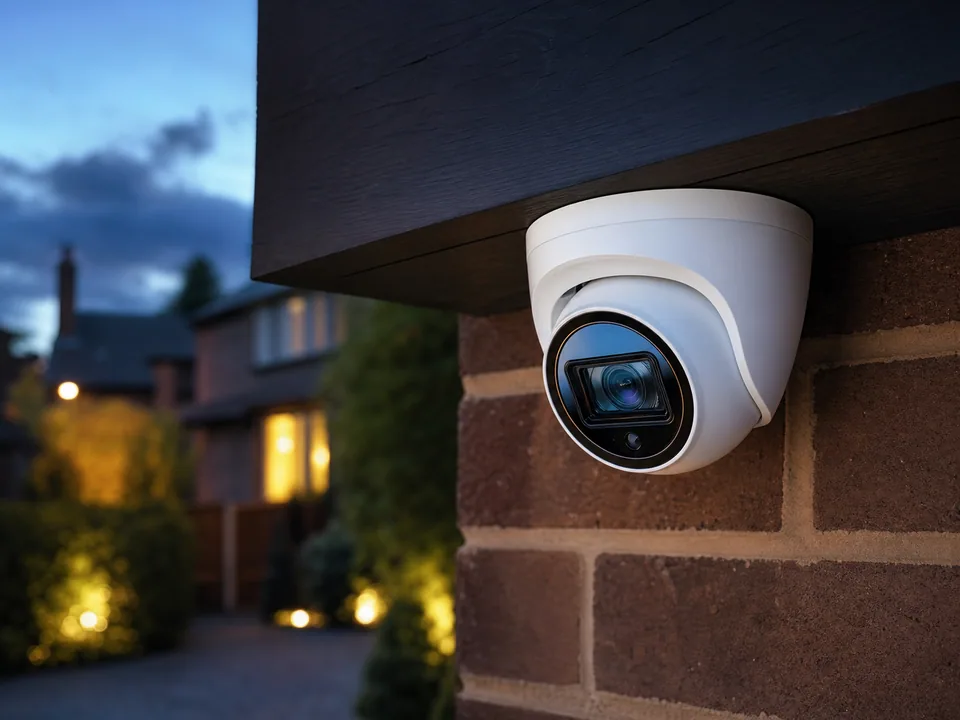
Infrared cameras can provide monochrome detail in darkness, while ColorVu technology is designed to retain colour in suitable low-light scenes. Neither option overcomes poor positioning, excessive distance or reflective surfaces. A bright wall close to the camera can dominate exposure; rain, insects and cobwebs can also affect night images. BlueMax selects illumination and angle around the scene instead of treating one technology as universally best.
White-light or hybrid illumination may provide colour and deterrence but should not shine into bedrooms, roads or neighbouring land. The survey checks available light, target distance and whether the homeowner wants discreet observation or visible lighting. The completed system is tested after dark where practical, and settings can be refined as seasons change.
AI-enabled home CCTV can classify movement as a person or vehicle, create intrusion or line-crossing zones and make recorded search faster. This can reduce notifications caused by general pixel change, but results still depend on target size, camera angle, weather, shadows and commissioning. An alert should prompt verification, not be treated as proof of criminal intent.
Useful zones follow real boundaries: a side gate after dark, the drive entrance or a route toward rear doors. Public pavements, moving trees and busy roads should be excluded where possible. BlueMax configures a practical starting point and shows the homeowner how sensitivity and schedules can be adjusted without turning the phone into a constant alarm.
Where possible, domestic cameras should capture only the homeowner’s property. If a system records beyond the boundary—such as a public pavement, communal area or neighbour’s land—data protection responsibilities can apply. The homeowner should have a clear reason, minimise the area recorded, use signs where required, store footage securely, delete it regularly and be able to respond appropriately to requests from people shown in recordings.
BlueMax can narrow fields of view and configure privacy masks, but the homeowner remains responsible for operating the system lawfully. Audio is particularly intrusive and should not be enabled simply because a camera supports it. The ICO home CCTV guidance should be reviewed whenever cameras may see outside the property boundary.
Some insurers may value professional security measures, but CCTV does not automatically reduce a premium or satisfy a policy condition. Homeowners should ask their insurer whether it requires a particular standard, retention period or maintenance arrangement before relying on the system. BlueMax provides a written scope and system handover; the insurer decides what benefit, if any, applies.
The homeowner controls recordings on their own NVR and authorised account, subject to applicable rights and responsibilities. Important footage should be exported promptly before it is overwritten, kept securely and shared only with an appropriate recipient such as police or an insurer. Ordinary recordings should not be posted publicly without considering the privacy and safety of people shown.
Future expansion is easiest when the recorder has spare channels, the PoE switch has capacity, storage can be increased and cable routes are documented. A four-camera installation may later need a garden office, upgraded drive view or additional side access. BlueMax asks about extensions, electric gates, outbuildings and changing vehicle arrangements before selecting the core equipment.
At handover, every agreed view, recording schedule, timestamp, storage status, detection rule and authorised device is checked. The homeowner learns live view, playback, smart search and export, then receives a clear route for aftercare. A free survey turns general concerns into a practical camera schedule and transparent quotation without obliging the homeowner to buy an oversized system.
Show us the entrances, vehicles, garden routes and outbuildings that matter. BlueMax will turn them into a proportionate coverage plan.
Every home is assessed for camera positions, cable routes, recording, access and installation conditions. “From” prices apply to qualifying standard installations; your written quotation confirms exactly what is included before booking.
From £899
A balanced starting point for a typical house covering the entrance, driveway, side route and rear access.
From £1,249
Additional views for detached homes, larger gardens, garages or properties with more than one side approach.
From £1,599
Comprehensive planning for larger homes, multiple entrances, detached buildings or extensive drive and garden routes.
Custom quote
A tailored design for long drives, gates, multiple buildings, rural connectivity or more complex security requirements.
Prices are starting points for qualifying standard installations. Your written quotation confirms the complete scope and all applicable charges. Specialist access, unusually long cable routes, building work, network remedial work, outbuildings and non-standard electrical requirements may affect the final price.
BlueMax selects camera, recording and app capabilities around the home rather than selling a list of specifications. Where suitable, that may include professional Hikvision home CCTV with ColorVu and intelligent detection; the exact models are confirmed for your property. Compare the ecosystem in our Hikvision CCTV systems and installation guide. Each feature is configured, tested and demonstrated during handover.
Classify relevant movement as a person to improve smart search and reduce general-motion notifications.
Identify vehicle events around drives, gates and parking areas without treating every pixel change alike.
Notify authorised users when agreed people, vehicle or boundary events occur during selected schedules.
Retain useful colour detail in suitable low-light scenes when positioning and available illumination support it.
Match infrared, visible white light or hybrid illumination to the required distance, surfaces and neighbours.
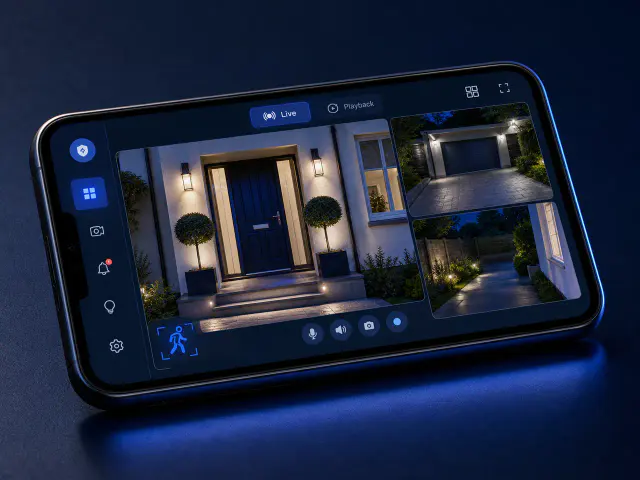
Provide secure live view and playback on compatible phones and tablets through authorised accounts.
Choose continuous, scheduled or event-supported recording according to evidence needs and storage capacity.
Protect selected footage off site where a compatible service, subscription and broadband connection are agreed.
Keep professional local recordings with capacity calculated around camera count, quality and retention goals.
Use selected zones and schedules for general movement where AI classification is unnecessary or unavailable.
Block defined parts of a view, such as neighbouring windows or gardens, from being recorded unnecessarily.
Speak through compatible equipment where appropriate, while treating recorded audio as a separate privacy decision.
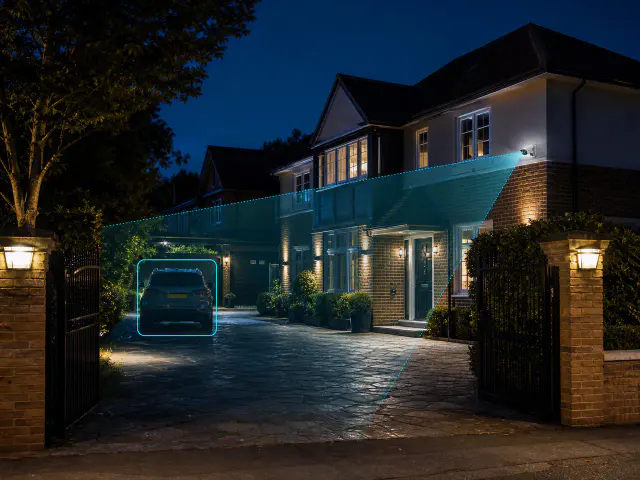
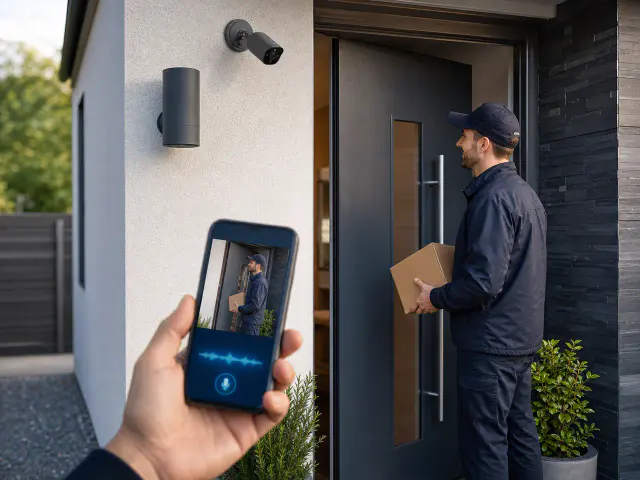
BlueMax keeps the advice, installation, app setup and aftercare connected so there is clear accountability at every stage.
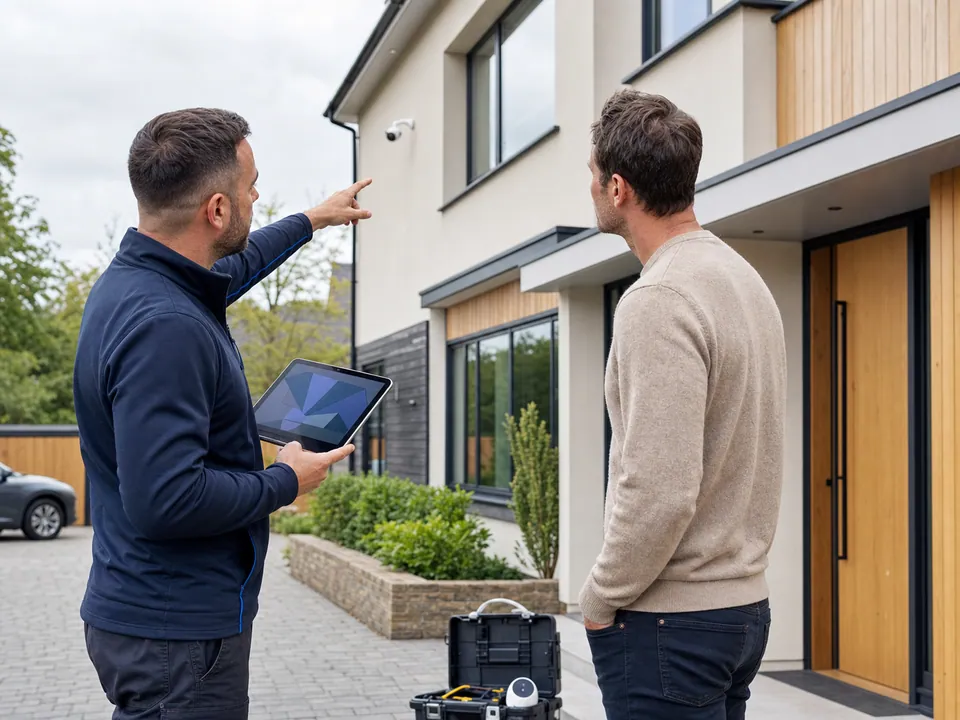
We listen to your concerns and inspect the home, approaches, boundaries, lighting and existing infrastructure.
Entrances, vehicles, side routes, gardens and outbuildings are prioritised around realistic household risks.
You receive an explained camera plan, recording approach and transparent written quotation.
Cameras, neat cabling, network equipment and the secure NVR are fitted with care.
Authorised phones and tablets are connected using secure accounts and practical notification settings.
Views, recording, timestamps, storage, night imaging, detection zones and remote access are verified.
Your household learns live view, playback, search, export and basic system checks.
BlueMax explains maintenance, direct support and the three-year on-site replacement warranty.
These answers cover design, cost, privacy, recording and everyday use. Your free survey confirms what is suitable for your own property.
Book a free home surveyBlueMax home systems start from £899 for a qualifying standard four-camera installation, £1,249 for six cameras and £1,599 for eight cameras. Final price depends on camera type, cable routes, access, recording, network work and property conditions. The free survey produces a written quotation before booking.
Yes. BlueMax assesses entrances, driveway, gardens, side access, outbuildings, lighting, cable routes, broadband equipment and privacy boundaries. The survey lets us recommend useful views rather than pricing from camera count alone.
Yes. A professional NVR can record continuously, on a schedule or with event markers, subject to storage capacity and configuration. Continuous recording gives a complete timeline, while intelligent event search helps locate relevant moments quickly.
Yes. Wired IP cameras can record to a local NVR over the home network without using Wi-Fi. Internet access is normally required for remote viewing, cloud services and notifications, but local recording can continue during an internet outage if the equipment remains powered.
Yes. Compatible systems allow authorised users to view live video, playback and alerts through a secure mobile app. Remote access depends on the home broadband connection and should use strong account security. Important evidence remains recorded locally on the NVR.
Planning permission is not normally required in England, but limits and local circumstances apply. Listed buildings, conservation areas, flats, leases and unusual mounting positions may require consent. Check the Planning Portal CCTV guidance and ask your local planning authority when unsure. Rules outside England can differ.
Storage depends on camera quantity, resolution, frame rate, recording mode and disk capacity. BlueMax sizes the NVR around an agreed target and demonstrates how to check available history. Footage should not be retained longer than necessary, especially where cameras record beyond the property boundary.
Neighbours can raise concerns, particularly if cameras capture their windows, garden or shared areas. Homeowners should use proportionate angles, privacy masks and clear communication. If recording extends beyond your boundary, data protection responsibilities may apply.
ColorVu and suitable white-light or hybrid cameras can retain colour in appropriate low-light scenes. Results depend on available light, distance, surfaces and positioning. Infrared may provide stronger monochrome detail in other locations, so the survey matches the technology to each view.
The homeowner controls footage stored on their NVR and authorised accounts, subject to applicable privacy and data-protection responsibilities. BlueMax does not routinely access recordings. Important clips can be exported for police or insurers through the trained user workflow.
Yes, when the original design leaves spare NVR channels, PoE power, bandwidth, storage and suitable cable routes. Tell BlueMax about future extensions, outbuildings or gates during the survey so the core equipment does not unnecessarily restrict expansion.
Many homes use four cameras for front entrance, driveway, side route and rear access. Terraces may need fewer, while detached or rural homes may need six or eight. The right number follows from required views and evidence, not house size alone.
For permanent installations, wired PoE cameras generally provide stable data and power through structured cabling and record directly to an NVR. Wireless cameras can suit particular constraints but still require power and depend on radio coverage, interference and battery or subscription arrangements.
Standard cameras, switches and recorders stop when their power source fails. A correctly sized uninterruptible power supply can provide temporary backup for selected equipment. Backup duration depends on the connected load and battery capacity.
Yes, a local NVR system can keep recording if the cameras, switches, recorder and local network remain powered. Mobile viewing, notifications and cloud backup may be unavailable until the broadband connection returns.
Yes. Compatible systems can provide separate or appropriately shared authorised access. Accounts should be protected, limited to people who genuinely need them and removed promptly when a device is lost or a person no longer requires access.
AI-enabled cameras can classify people or vehicles, apply selected boundary rules and make recorded search faster. It reduces irrelevant events but is not infallible. Performance depends on target size, angle, lighting, weather and careful commissioning.
Yes. BlueMax can specify genuine Hikvision cameras, NVR recording and compatible intelligent features where they suit the property and requirements. Exact models, resolution, audio capability, lighting and storage are confirmed in the written quotation rather than assumed from a brand name alone.
BlueMax uses person or vehicle classification where appropriate, excludes public roads and moving vegetation, adjusts zones and sensitivity, and applies useful schedules. Seasonal changes may require refinement, and the homeowner is shown how to make controlled adjustments.
Audio is more intrusive than video and can capture conversations beyond the intended security purpose. It should not be enabled simply because a camera supports it. Consider necessity, household expectations, neighbours and data-protection responsibilities before using recorded audio.
Indoor cameras may support entry verification, pet monitoring or a specific care need, but everyone who regularly uses the home should understand the purpose. Avoid bedrooms, bathrooms and other private spaces, and consider whether the same goal can be achieved less intrusively.
Possibly, but written permission may be needed from a landlord, freeholder or management company before drilling, changing communal fabric or recording shared areas. Review the lease or tenancy and establish ownership of the door, wall, balcony and hallway first.
If cameras capture beyond your property boundary, ICO guidance says you should let people know CCTV is in use, for example through appropriate signage. Even within the boundary, a clear sign can improve transparency and deterrence.
It may support a security discussion, but no reduction is guaranteed. Ask your insurer whether it requires particular standards, maintenance or retention before relying on CCTV as a policy condition. BlueMax supplies a clear quotation and handover record.
Many straightforward residential systems can be completed within one working day. Camera count, access, cable routes, loft conditions, outbuildings, network work and testing can extend the programme. The quotation sets a realistic expectation for your property.
Check camera lenses for dirt, cobwebs and vegetation; confirm views, recording, timestamps, storage and mobile access; review users and privacy zones; and make sure lights or new building work have not obstructed coverage. BlueMax can advise on periodic maintenance.
Yes, an appropriately positioned garden or indoor camera can help verify pet activity, but general home security cameras may not identify small animals reliably. Choose the view and alerts around the specific purpose and avoid unnecessary recording of private household life.
The three-year on-site replacement warranty covers qualifying faults in equipment supplied by BlueMax and BlueMax installation workmanship, subject to the published terms and exclusions. Read the full BlueMax warranty before booking.
BlueMax Technology Support Ltd combines site-specific residential design, premium equipment, neat professional workmanship and transparent pricing. Your household receives app setup, practical training, long-term support and a three-year on-site replacement warranty subject to the published terms.
Speak to BlueMax for a property assessment, camera schedule, transparent quotation and professional installation.
 WhatsApp
 View Google Business